How to Buy Fine Art Prints Online: A Complete Buyer Guide
Start with the artwork. Then make the listing prove what will arrive, how it was made, and how the seller will protect it.
Start With the Artwork You Want to Live With
A perfect specification cannot rescue an image that feels wrong in the room. Look at the work first. Then use the print details to decide whether the finished object supports what pulled you into the image.
Make the Listing Describe the Physical Print
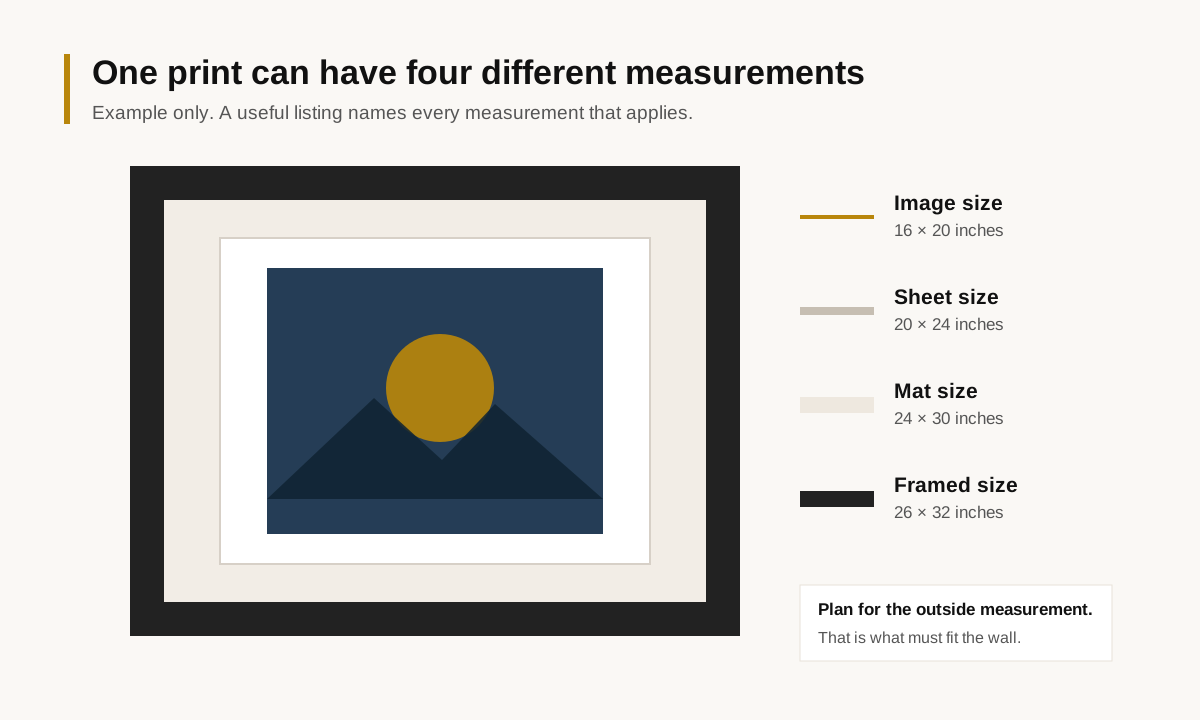
A screen image is not the product. The listing should name the print process and paper. It should also separate image size from sheet size and framed size. If the seller cannot explain the physical object clearly, the photographs and paperwork have more work to do.
Paper Finish Changes What the Room Does to the Image
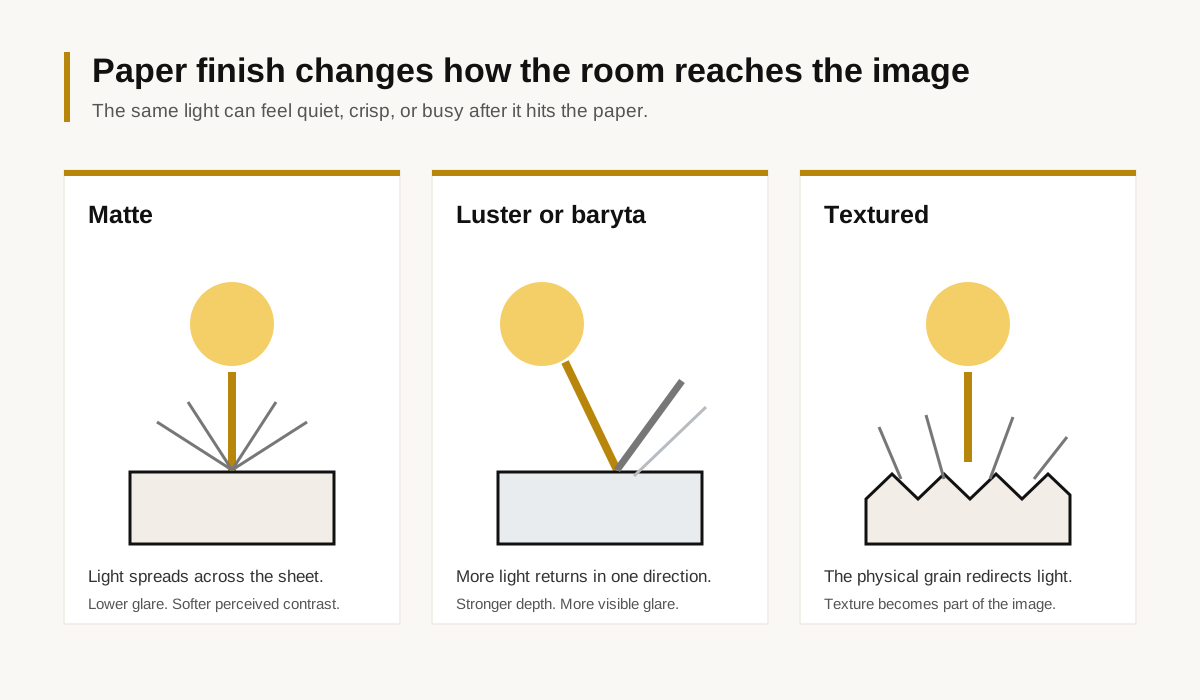
Matte paper scatters light. Luster and baryta can return a stronger reflection. Textured paper adds its own physical pattern, so the actual image and room have to be judged together.
Paper and Print Process Do Different Jobs
The process helps explain how the image was made. The paper changes how the finished print feels and reflects light. Pigment inkjet, chromogenic, and silver gelatin prints are different objects. None wins by name alone. Ask how the chosen process and paper support this image.
Plan for the Size That Reaches the Wall
The printed image may sit on a larger sheet. A mat and frame make the finished piece larger again. Use the outside frame measurement when you plan the wall.
Read the Edition Record Without Letting It Sell the Print
A limited edition has a declared production limit. It may be signed, numbered, stamped, labeled, or documented another way. An open edition has no fixed production ceiling. Neither label establishes value by itself. The listing should explain the edition structure and match the marks on the print.
Use the Photographs to Inspect the Object
Look for a straight-on view of the complete print. A room view should show believable scale. Detail photographs should show the image, paper, margins, signature, edition marks, reverse, mount, and frame when they apply. Filters and stock-room mockups cannot document condition.
Consider Framing Before You Buy
A frame advertised by one size may refer to its opening instead of its outside measurement. Ask what the stated size describes. Confirm whether the print touches the glazing and whether the mount can be removed without damaging the work. The room light matters too because paper and glazing can both reflect it.
Review Packaging and Delivery
Flat and rolled shipping can both be appropriate. The choice depends on the print size, process, paper, mounting, and framing. The seller should explain how the print is protected from pressure, moisture, bending, and abrasion. Expensive or limited work also needs delivery tracking and a clear damage record.
Know the Return and Damage Terms
Read the policy before ordering. It should explain what happens when the package is damaged or the print does not match the listing. It should also state who pays return shipping and how quickly a problem must be reported. Photograph the unopened package and the damage before discarding any packing material.
Fine Art Print Buyer Checklist
The artwork earns your attention. These checks tell you whether the listing earns the purchase.
- The complete artwork and finished print are shown without filters
- The print process, paper, finish, and production source are named
- Image size, sheet size, mat size, and framed size are separated
- Edition limits, proof counts, signatures, and authorization are explained
- Condition photographs show the front, reverse, margins, mount, and frame when relevant
- The certificate, invoice, listing, and marks describe the same print
- Packaging, delivery, damage, return, and refund terms are clear